Drawing on research from leading institutions and real-world success stories, this comprehensive guide unfolds five transformative pillars that underpin lasting productivity and life hacks. You will discover how to choose high-impact tasks, craft your day around focused time segments, shape your environment for peak performance, leverage micro-habits and single-tasking, and commit to ongoing reflection. By weaving these techniques into your everyday routine, you’ll cultivate momentum, reduce decision fatigue, and achieve more in less time.
Whether you aim to conquer complex projects, balance multiple responsibilities, or simply carve out space for creative pursuits, these approaches will equip you with a resilient framework. Let’s embark on an actionable journey toward sustained efficiency and personal growth in today’s fast-paced world.
Prioritize the Day with Most Important Tasks
Identifying the tasks that move the needle is at the heart of effective productivity and life hacks. Instead of scattering energy across a sprawling to-do list, focus on two or three Most Important Tasks (MITs) each morning. These are the high-leverage activities—writing a critical report, preparing for a presentation, or designing a core product feature—that directly advance your major goals.
Defining Your MITs
Begin each day by reviewing your overarching objectives and selecting the MITs that align most closely. Writing them down on a sticky note, digital planner, or an app like Todoist not only reinforces commitment but creates a visual cue to keep you on track. Aim to tackle these MITs within the first 90 minutes of your work session, when mental energy and willpower are at their peak.
Why MITs Matter
Research shows that priming your day around critical tasks enhances momentum and builds a sense of accomplishment early on. According to studies in organizational psychology, achieving key milestones triggers positive feedback loops in the brain, fueling motivation for subsequent work. By contrast, starting with low-impact chores can leave you drained and demoralized, even if you check off multiple items.
Over time, consistently applying MITs sharpens your ability to discern what truly matters and prevents overwhelm. If you find that a selected task remains untouched by mid-afternoon, reassess its relevance rather than pushing it forward at the expense of better opportunities. This disciplined focus is one of the most powerful productivity and life hacks for professionals seeking concentrated results.
Harness the Power of Time Blocking

Time blocking is an essential productivity and life hack that transforms how you allocate attention throughout the day. Instead of reacting to incoming requests or emails on the fly, you proactively assign specific intervals for deep work, administrative tasks, meetings, and personal breaks. This method curbs decision fatigue, reduces context-switching, and safeguards uninterrupted focus.
Designing Your Blocks
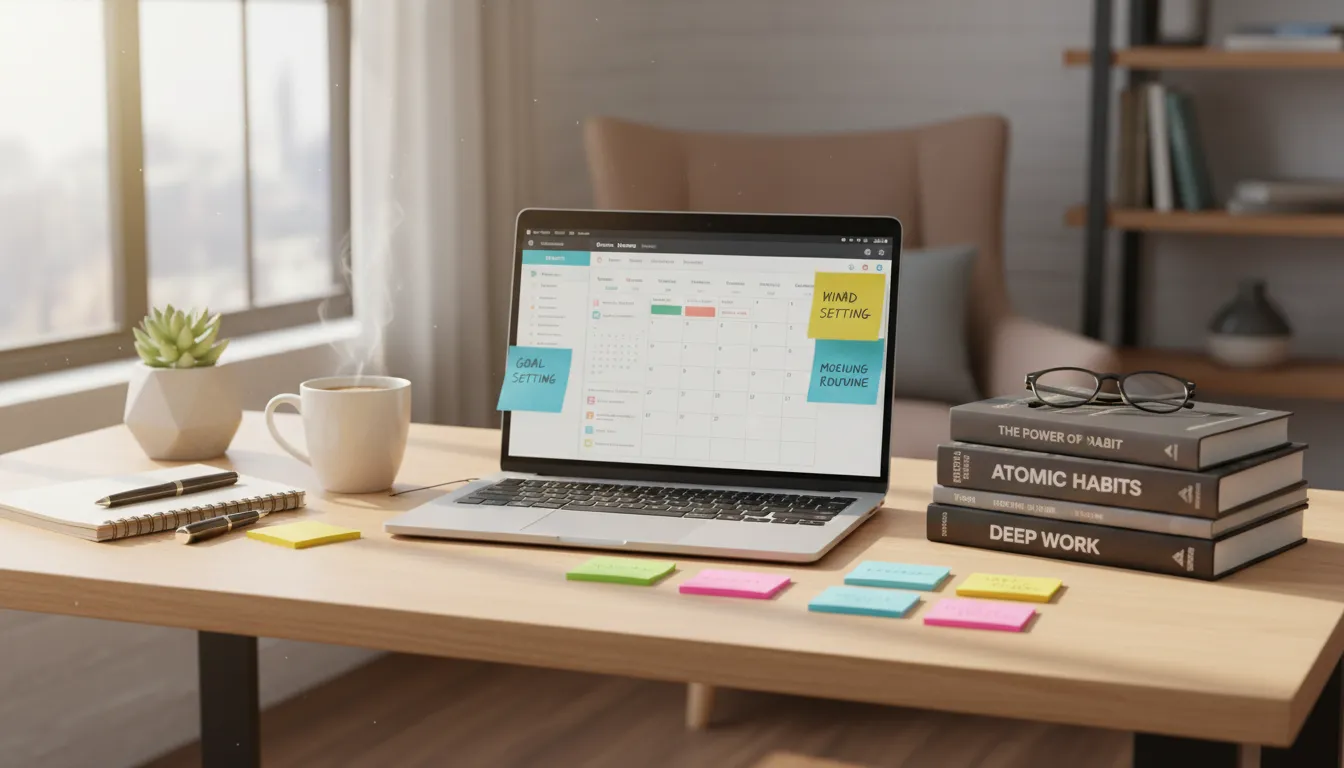
Start by mapping out your core responsibilities: creative work, collaboration sessions, routine administrative duties, and wellness breaks. Use a digital calendar—such as Google Calendar or Outlook—and color-code each category for quick visual reference. For instance, reserve bright hues for deep work and softer tones for buffer periods or lunch. Block out two-hour segments for uninterrupted creative tasks, then follow with 30-minute slots for emails or calls.
Protecting Your Focus
Activate “Do Not Disturb,” or similar settings during your concentration blocks to fend off distractions. Communicate these protected hours to colleagues and family members, setting clear expectations about your availability. Embracing time blocking aligns with research by the National Institute of Standards and Technology (NIST), which highlights how uninterrupted stretches can improve task completion rates by up to 40%.
By committing to structured intervals, you reclaim control over your schedule, heighten efficiency, and maintain sustainable energy levels. Over time, this disciplined rhythm becomes second nature, helping you juggle high-priority projects without sacrificing personal well-being.
Optimize Your Workspace Environment
A thoughtfully curated physical environment forms the foundation of effective productivity and life hacks. Your workspace isn’t just a backdrop for tasks—it directly influences cognitive performance, mood, and long-term health. Whether you work in a home office, co-working space, or university lab, strategize each element to support your best work.
Ergonomics and Air Quality
Invest in an ergonomic chair and adjustable desk to maintain proper posture and reduce strain. Ensure your monitor sits at eye level to prevent neck fatigue. Good lighting, preferably natural light, can decrease eye strain and uplift mood; if unavailable, choose adjustable LED lamps with neutral white bulbs. Incorporate greenery—studies by the Centers for Disease Control and Prevention (CDC) suggest indoor plants can enhance air quality and reduce stress.
Minimize Clutter, Maximize Calm
A cluttered desk triggers cognitive overload, diverting precious mental resources. Adopt a minimalistic approach: keep only essential items within arm’s reach and store everything else in closed drawers or digital folders. Noise-cancelling headphones or ambient sound apps—such as focus playlists and binaural beats—further shield you from external disturbances, fostering deeper concentration.
By shaping an environment that aligns with your work style, you set the stage for consistent productivity and life hacks that endure beyond mere habit-formation.
Integrate Micro-Habits and Single-Tasking

Complex routines can be daunting, but small, incremental changes—micro-habits—compounded over time can yield dramatic improvements in your productivity and life hacks arsenal. Pair these tiny habits with the principle of single-tasking to maximize efficiency and reduce errors.
The 2-Minute Rule
Rooted in David Allen’s “Getting Things Done” methodology, the 2-Minute Rule states: if a task takes less than two minutes, complete it immediately. From sending a quick email to refilling your water glass, these micro-actions prevent minor chores from becoming a burdensome backlog.
Mastering Single-Tasking
Contrary to popular belief, multitasking diminishes productivity, incurring cognitive switch costs that slow you down and heighten mistakes. The American Psychological Association (APA) reports that continuous task-switching can reduce productivity by up to 40%. Instead, concentrate on one project at a time: close irrelevant browser tabs, disable non-essential notifications, and commit fully to the current activity until it is complete or reaches a natural checkpoint.
By integrating micro-habits with a single-tasking mindset, you cultivate a flow state where complex endeavors feel more manageable, creative insights arise more readily, and overall performance climbs steadily.
Review, Reflect, and Evolve Your System
Long-term success in productivity and life hacks hinges on continuous improvement. Dedicate weekly time—30 to 60 minutes—to assess what worked, what didn’t, and how you can refine your approach. This reflective practice turns experience into actionable insights.
Tracking Key Metrics
Maintain a simple journal or spreadsheet logging completed tasks, hours spent in deep work, and personal well-being indicators such as stress levels or energy ratings. Over time, you’ll identify patterns: peak creative hours, recurring obstacles, and underutilized strategies. These data points inform precise adjustments, ensuring your system evolves with your changing needs.
Setting Iterative Goals
Break overarching objectives into bite-sized milestones and review progress against them each week. Ask yourself: What breakthroughs did I achieve? Which techniques felt most natural? Where did I struggle, and why? This loop of planning, execution, and reflection embeds adaptability, transforming productivity and life hacks from rigid rules into personalized, dynamic tools.
By embracing a growth mindset and iterating regularly, you stay ahead of shifting priorities and sustain momentum throughout the year.
Conclusion
Implementing these five foundational pillars—prioritizing key tasks, time blocking, optimizing your environment, leveraging micro-habits with single-tasking, and committing to ongoing reflection—provides a holistic blueprint for productivity and life hacks in today’s fast-paced world. Each element dovetails with the others, creating a resilient framework that scales with increased responsibilities and evolving goals.
Start by adopting one or two strategies, observe their impact, and gradually weave additional techniques into your routine. With consistency and a willingness to adapt, you’ll unlock sustained focus, balanced well-being, and accelerated achievement. Here’s to mastering your days and thriving in this year and beyond.
FAQ
1. What are productivity and life hacks for peak performance?
Productivity and life hacks for peak performance are smart strategies designed to help you work more efficiently, save time, and improve focus. They combine simple behavioral changes, tools, and routines that allow you to achieve better results with less effort while maintaining mental clarity and energy.
2. Why is peak performance important in daily life?
Peak performance helps you stay consistent, focused, and effective in both personal and professional tasks. It allows you to complete more work in less time while reducing stress and improving decision-making. This leads to better productivity, higher confidence, and long-term success.
3. What are some innovative productivity hacks?
Innovative productivity hacks include time blocking, using AI tools for automation, batching similar tasks, digital decluttering, and applying the 80/20 rule. These methods help streamline workflows and eliminate unnecessary distractions, making your work process more efficient.
4. How does time blocking improve productivity?
Time blocking involves scheduling specific time slots for each task. It reduces multitasking, improves focus, and ensures that important work gets dedicated attention. By following a structured schedule, you can manage your day more effectively and avoid procrastination.
5. What is the 80/20 rule in productivity?
The 80/20 rule, or Pareto Principle, states that 80% of results come from 20% of efforts. By identifying and focusing on high-impact tasks, you can maximize output while minimizing wasted time and energy.
6. Can digital tools improve productivity?
Yes, digital tools like task managers, calendar apps, automation software, and note-taking apps can significantly improve productivity. They help organize tasks, set reminders, and reduce manual effort, allowing you to focus on more important work.
7. How does multitasking affect performance?
Multitasking usually reduces performance because the brain switches between tasks, causing loss of focus and efficiency. It is more effective to complete one task at a time for better accuracy and faster results.
8. What is task batching?
Task batching means grouping similar tasks together and completing them in one session. For example, replying to all emails at once instead of throughout the day. This reduces context switching and improves concentration.
9. How can morning routines boost productivity?
A strong morning routine sets the tone for the entire day. Activities like exercise, planning your tasks, meditation, or reading can improve focus, energy, and motivation, helping you start the day with clarity and purpose.
10. What is digital decluttering?
Digital decluttering involves organizing and cleaning your digital space, such as emails, files, and apps. It reduces distractions, improves workflow, and makes it easier to find important information quickly.
11. How does goal setting improve productivity?
Goal setting provides direction and clarity. It helps you prioritize tasks and track progress. Breaking large goals into smaller steps makes them more achievable and keeps you motivated.
12. Why is focus important for peak performance?
Focus allows you to complete tasks efficiently without distractions. It improves quality of work and reduces time spent switching between tasks. Strong focus is essential for achieving peak performance consistently.
13. How can breaks improve productivity?
Taking regular breaks helps refresh your mind, reduce stress, and prevent burnout. Short breaks between tasks improve concentration and help maintain high energy levels throughout the day.
14. What habits reduce productivity?
Habits like procrastination, excessive multitasking, poor planning, and constant phone use can reduce productivity. Avoiding these habits helps you stay focused and achieve better results.
15. How long does it take to improve productivity habits?
Improving productivity habits can take a few weeks to a few months, depending on consistency. Small daily improvements, when repeated over time, lead to long-lasting positive changes in performance.