
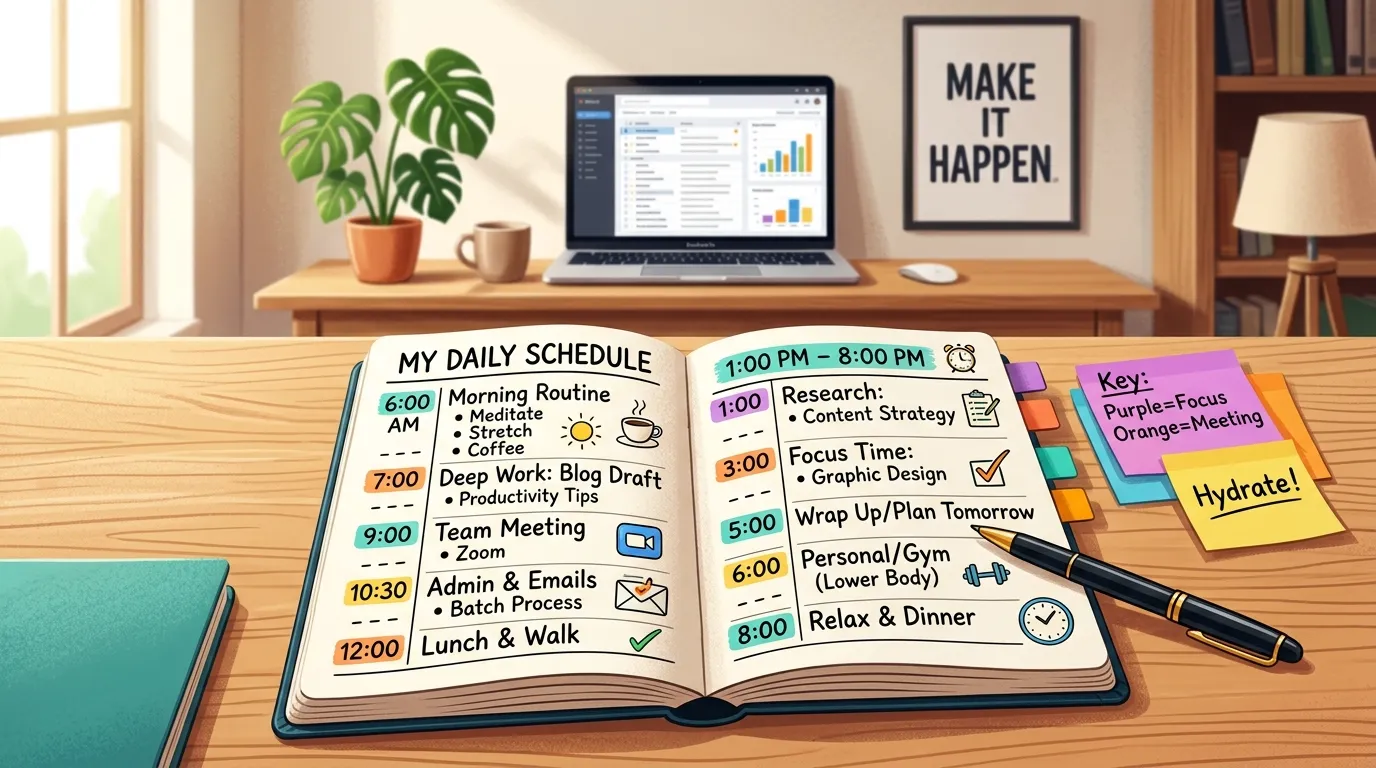
This guide explores proven strategies for organizing your day. You will learn to audit tasks, prioritize goals, apply time-blocking techniques, and avoid common scheduling mistakes. Discover practical frameworks and expert tips to boost efficiency, enhance focus, and reclaim your time.
Creating an effective routine starts with understanding How to Create a Daily Schedule for Maximum Productivity. A well-structured schedule helps you manage time efficiently, prioritize important tasks, and reduce distractions throughout the day. When you learn How to Create a Daily Schedule for Maximum Productivity, you can balance work, personal life, and rest without feeling overwhelmed. It allows you to focus on high-value activities, set realistic goals, and maintain consistency in your daily routine. By following simple planning techniques and time management strategies, mastering How to Create a Daily Schedule for Maximum Productivity can significantly improve your efficiency and overall success.
Understanding How to Create a Daily Schedule for Maximum Productivity
Learning how to create a daily schedule for maximum productivity requires more than just jotting down a to-do list. It demands a strategic approach to managing your energy, prioritizing high-impact tasks, and setting realistic boundaries. When you master your daily routine, you reduce decision fatigue and ensure you spend time on what truly matters.
Research from the American Psychological Association highlights that structured routines significantly lower stress levels and improve mental bandwidth. By intentionally mapping out your day, you transition from reacting to your environment to proactively directing your success.
The Psychology Behind Routine

Human brains thrive on predictability. Every time you pause to decide what to do next, you drain cognitive resources. A structured schedule eliminates this friction. By automating your decision-making process regarding when to do things, you reserve your mental energy for how to do them effectively.
Step-by-Step: How to Create a Daily Schedule for Maximum Productivity
Building an effective schedule is a personalized process. Follow these core steps to design a framework that aligns with your specific goals and biological rhythms.
Step 1: Audit Your Current Time Usage
Before you can build an optimized routine, you must understand your current habits. Track your activities for three days. Note when you feel most energetic and when you hit a slump. This data forms the baseline for your new schedule. Identify hidden time-wasters, such as excessive social media scrolling or unproductive meetings, and plan to cut them out. Consider integrating a time tracking app to gather accurate insights.
Step 2: Identify Your Peak Energy Windows

Not all hours hold equal value. Your chronotype dictates your natural energy peaks and valleys. Schedule your most demanding, deep-work tasks during your peak hours. Save administrative work, emails, and routine meetings for your low-energy periods. Matching task difficulty to your energy levels is the secret to getting more done in less time.
Step 3: Prioritize Tasks Using the Eisenhower Matrix
To figure out how to create a daily schedule for maximum productivity, you must master prioritization. The Eisenhower Matrix divides tasks into four quadrants based on urgency and importance:
- Urgent and Important: Do these immediately.
- Important, Not Urgent: Schedule these.
- Urgent, Not Important: Delegate these.
- Neither: Eliminate these.
Using this framework ensures you focus on high-impact projects rather than just staying busy.
Step 4: Implement Time Blocking

Time blocking involves dividing your day into distinct blocks of time, each dedicated to a specific task or group of tasks. This prevents multitasking, which research shows can reduce productivity by up to 40%.
Popular Time Blocking Methods Compared
|
Method |
How It Works |
Best For |
|---|---|---|
|
Traditional Time Blocking |
Assigning specific hours to specific tasks. |
People with predictable workdays. |
|
Pomodoro Technique |
25 minutes of work followed by a 5-minute break. |
Tasks requiring intense focus; avoiding burnout. |
|
Day Theming |
Dedicating entire days to one specific area of focus. |
Entrepreneurs and executives juggling multiple roles. |
|
Time Boxing |
Setting a strict time limit for a task to be completed. |
Perfectionists who spend too much time on minor details. |
Implementing these methods alongside digital calendar management tools keeps you accountable to your plan.
Auditing your time, respecting your energy levels, and applying rigid prioritization structures build a solid foundation. These steps transform abstract goals into an actionable daily reality.
Expert Insights and Pro Tips
Even the best-laid plans fail without proper execution. Top executives and productivity experts rely on advanced tactics to protect their time.
- Plan the Night Before: Never wake up wondering what you need to do. Spend ten minutes each evening outlining your primary objectives for the following day.
- The “Eat the Frog” Strategy: Tackle your most challenging or dreaded task first thing in the morning. Once you complete it, the rest of the day feels significantly easier.
- Embrace Strategic Pauses: Do not pack your schedule back-to-back. Leave 15-to-30-minute buffers between major tasks to account for overruns and mental recovery.
- Batch Routine Tasks: Group similar small tasks together. Reply to all emails, return phone calls, and process invoices in one dedicated 45-minute block rather than scattering them throughout the day.
- Optimize Your Workspace: A cluttered desk creates a cluttered mind. Explore our guide on home office ergonomics to ensure your physical environment supports your mental focus.
Common Mistakes to Avoid
When figuring out how to create a daily schedule for maximum productivity, many people fall into predictable traps.
- Overestimating Available Time: The planning fallacy causes us to underestimate how long tasks take. Always add a 20% buffer to your time estimates.
- Failing to Schedule Breaks: Working non-stop leads to diminishing returns. Your brain requires downtime to consolidate information and recharge.
- Ignoring Personal Life: Productivity is not just about work. A sustainable schedule must include blocks for exercise, family, hobbies, and adequate sleep.
- Being Too Rigid: Life is unpredictable. If an emergency arises, an overly strict schedule will cause unnecessary stress. Build flexibility into your framework.
Avoiding these pitfalls ensures your schedule remains a tool for empowerment rather than a source of anxiety. Flexibility and realistic expectations are paramount to long-term success.
Conclusion
Understanding how to create a daily schedule for maximum productivity transforms your approach to work and life. By auditing your time, prioritizing effectively, and utilizing strategic time-blocking, you take control of your day. Start small, refine your process weekly, and watch your output soar. Ready to optimize your workflow? Subscribe to our newsletter today for weekly actionable insights and advanced planning templates.
Frequently Asked Questions (FAQs)
1. How long does it take to get used to a new daily schedule?
It typically takes between 21 and 66 days to form a new habit. Start with minor adjustments rather than completely overhauling your day to make the transition smoother and more sustainable.
2. What is the most effective time management technique?
The most effective technique varies by individual, but time blocking paired with the Pomodoro technique works best for the majority of knowledge workers. It balances deep focus with necessary mental breaks.
3. How to create a daily schedule for maximum productivity when working from home?
Working from home requires strict boundaries. Set definitive start and end times, create a dedicated workspace, and communicate your availability hours to your household and team members. Check out remote work strategies for more details.
4. Should I schedule my weekends too?
While you shouldn’t schedule weekends as strictly as workdays, having a loose outline ensures you make time for both chores and essential relaxation.
5. How do I handle unexpected interruptions to my schedule?
Build “buffer blocks” into your day. Leave 30 to 60 minutes completely unscheduled to absorb urgent emails, emergency meetings, or tasks that run longer than anticipated.
6. Is digital or paper scheduling better?
Digital calendars easily sync across devices and allow for recurring tasks, while paper planners eliminate digital distractions and improve memory retention. Use whichever format you consistently update.
7. Why do I keep failing to stick to my daily schedule?
You are likely over-scheduling yourself or failing to account for your natural energy dips. Review your schedule and reduce your daily commitments by 20% to create a more realistic plan.
8. How many tasks should I put on my daily to-do list?
Follow the 1-3-5 rule: aim to complete one major task, three medium tasks, and five small tasks per day. This prevents overwhelm while ensuring steady progress.
9. Does exercise actually improve productivity?
Yes. According to the Harvard Business Review, regular cardiovascular exercise improves cognitive function, enhances memory, and increases workplace performance significantly. Schedule it like a non-negotiable meeting.
10. How to create a daily schedule for maximum productivity if my hours are irregular?
If you do shift work or have an unpredictable routine, focus on sequence rather than time. Create a morning routine and an evening routine that remain consistent regardless of what time you actually wake up or go to bed. Use habit stacking to anchor these routines.